Impact Investing: A Hedge for Volatility; A Force for Equity
Public equities are living through a stretch of heightened unpredictability. Recent market analyses point to tariffs, shifting fiscal and monetary policy, and broader macroeconomic uncertainty as key drivers — with indices like the S&P 500 showing significant swings in direct response to economic news. If your portfolio’s stability depends entirely on public equities and bonds, it depends, whether you intend it to or not, on the next headline.
This is where impact investing earns its place, not only as a values add-on, but as a structural hedge. In contrast to the swings in public markets, private markets tend to exhibit lower volatility, offering a more stable investment alternative during turbulent stretches. Impact investments — which pursue social and environmental outcomes alongside financial return — often perform in ways uncorrelated with traditional public assets. They aren’t repricing because of a tariff announcement or a policy shift; they’re moving on the fundamentals of the community, business, or project they’re tied to. That uncorrelated behavior is exactly what diversification is supposed to deliver: a portfolio where turbulence in one part doesn’t automatically become turbulence everywhere. And because many impact investments are built around long-horizon, sustainable projects — affordable housing, worker-owned businesses, community lending, energy transition — they tend to generate steadier returns over time, further insulating a portfolio from short-term market swings.
 |
That stability matters more than ever against the backdrop we’re actually investing into. Nearly 3,000 people in the U.S. are billionaires today, up 9% year-over-year from 2024 to 2025 (Entrepreneur), while the broader economy has become increasingly K-shaped — one line climbing, another falling further behind, daily (US Bank). Ninety-three percent of corporate equities and mutual fund shares are held by the top 10% of U.S. households, with half held by the top 1% alone (2024). A public-market-only portfolio, however well-diversified within that universe, is still fundamentally a bet on the fortunes of a narrow slice of the population — the same slice most exposed to headline-driven volatility in the first place.
Private impact structures offer a different kind of ballast. Nubian Square Investment Advisors’ 50/50 Portfolio framework — 50% in socially responsible public equities, 50% deployed across private credit, private equity, venture capital, real estate, municipal bonds, CDFIs, and charitable giving — targets a 7% blended return over a 30-year horizon, rebalanced annually toward greater impact. Employee-owned businesses (co-ops, ESOPs, EOTs) have a track record of outperforming over the long run, and CDFI-backed private credit brings consistent, reliable histories that don’t hinge on quarterly market sentiment. None of this asks an investor to sacrifice rigor for values — it asks for the same underwriting discipline applied to a different, less correlated opportunity set.
This is also where the “too complex to access” myth breaks down. NSIA’s Impact Investing Research & Consulting practice maintains a database of 1,000+ public and alternative impact opportunities — roughly 250 of them CDFIs — assessing financial and impact data with equal rigor across private markets, micro equity, and undercapitalized businesses. We build investment policy statements, values-aligned strategy, and ongoing reporting for foundations, endowments, family offices, faith-based institutions, and fellow advisors, with fees tied to scope of work rather than assets under management — so the incentive is always aligned with getting the placement right, not simply growing the pool.
This is a live opportunity, not a hypothetical one. A portfolio built to weather volatility and a portfolio built to shift capital toward a more equitable economy don’t have to be two separate conversations. Increasingly, they’re the same one.
Welcome Jaime Limón
Director, Small Business Advisory & Investments
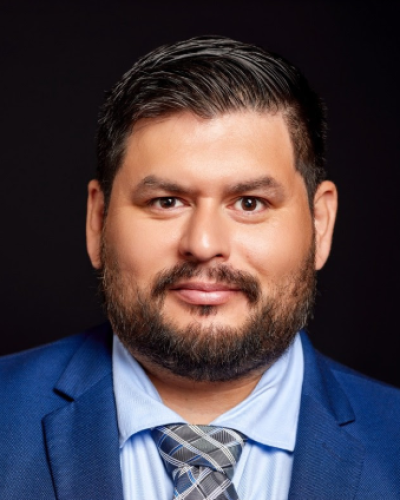
As a first-generation Latino professional, I have always been deeply passionate about closing the wealth gap and supporting underserved communities. Throughout my career, I noticed a recurring theme: hardworking small business owners and startup founders were often one bad quarter away from a cash crisis simply because they were flying blind financially. I realized that access to capital is only half the battle; the other half is capital readiness and financial literacy. I am drawn to this work because I want to bring institutional, CFO-grade financial intelligence to the community businesses that traditional private equity and commercial banks typically overlook. My ultimate value is bridging the gap between rigorous corporate finance and local economic empowerment.
I am a true “Investor-Operator.” I do not just sit behind a spreadsheet; I build systems and solve operational bottlenecks. Because I am fully bilingual in English and Spanish, I can sit at the table with both institutional executives and local, non-technical business owners, translating complex financial models into clear, actionable advice. I am a builder at heart—whether that means engineering a regional deal pipeline from scratch or deploying modern tech workflows to eliminate back-office friction. I bring a founder-level ownership mentality to everything I do, meaning I am highly comfortable rolling up my sleeves to stand up a new practice from the ground up.
My background uniquely bridges corporate development, institutional investing, and fractional CFO execution. Most recently, in Corporate Development at Swank Construction, I led financial modeling and operational due diligence for mid-market M&A targets and successfully secured $150K in non-dilutive grant capital. Through my own practice, Limón Advisory, I actively serve as a fractional CFO for small businesses, delivering cash flow forecasting, unit economics reviews, and investor-ready pitch materials. This analytical foundation is built on over seven years of driving sales and operations at Nestlé USA and CPG companies.
I hold an MBA from Carnegie Mellon University’s Tepper School of Business and a BA in Economics and Spanish from USC. To further sharpen my investment toolkit, I am currently a CFA® Level 1 Candidate and have completed rigorous private-market training through the SomosVC Fellowship, VC University, and Wall Street Prep.