| Myths & Misconceptions |
 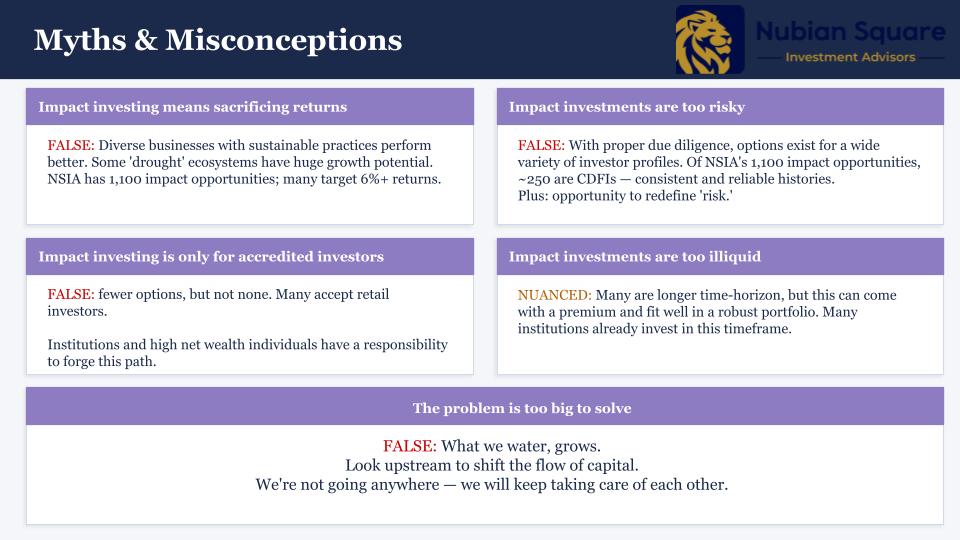 |
| Myth #1: Impact investing means sacrificing returns. FALSE This is probably the most persistent myth in our field, and it simply isn’t true. Some communities and sectors have been starved of capital for so long that the growth opportunities are significant. Research consistently shows that diverse businesses with sustainable practices outperform their peers. At NSIA, we maintain a database of over 1,100 impact investment opportunities — more than 100 of which are diverse allocators with a wealth equity and climate sustainability lens that also target returns of 6% or more. The options are there. You just need someone who knows where to look. Myth #2: Impact investing is only for accredited investors. FALSE There are fewer options for retail investors, but there are options. Many funds and a range of Community Development Financial Institutions (CDFIs) accept non-accredited investors and we need as many people to participate and demand better investment options as possible. And as long as options for non-accredited investors are smaller, we believe it is the responsibility of those with more than enough (like foundations and high net wealth investors) to forge this path — expanding access and building the on-ramps that make impact investing available to everyone, not just the wealthy few. Myth #3: It’s too risky. FALSE Risk is real in any investment — but it’s also relative, and it’s worth asking: what are we risking by not investing this way? With proper due diligence, impact investments can be matched to a wide variety of investor profiles. Of the 1,100+ opportunities in our database, 250 are CDFIs with long track records of reliability. More importantly, consider the systemic risk of the status quo: housing increasingly owned by corporations mandated to grow profits and private equity, resources chronically misallocated away from the people and places that need them most, and innovative community-minded entrepreneurs left without capital. That is also risk. We just don’t always call it that. Myth #4: It’s too illiquid. NUANCED It’s true that many impact investments carry longer time horizons. But longer-term commitments can come with a premium — and most institutions are already invested in long-horizon assets. The key is portfolio design. Illiquid impact investments can be a meaningful and well-functioning piece of a robust, diversified portfolio when positioned thoughtfully alongside other assets. Myth #5: The problem is too big to solve. FALSE This one might be the most dangerous myth of all, because it can stop us before we start. But here’s what we know: what we water grows. Change happens when we look upstream and shift where capital flows. The solidarity economy — the web of organizations, investors, and communities working toward a more just economy — is not a distant dream. It’s already being built, one investment at a time, by people who refuse to accept that the status quo is inevitable. We’re not going anywhere. And no matter the trajectory, we will keep doing what communities have always done: taking care of each other. |
| Interested in learning more about how to align your capital with your values utilizing private markets? Reach out to NSIA to explore what impact investing could look like in your portfolio. Follow us on LinkedIn and schedule a chat with our Investment Team. |